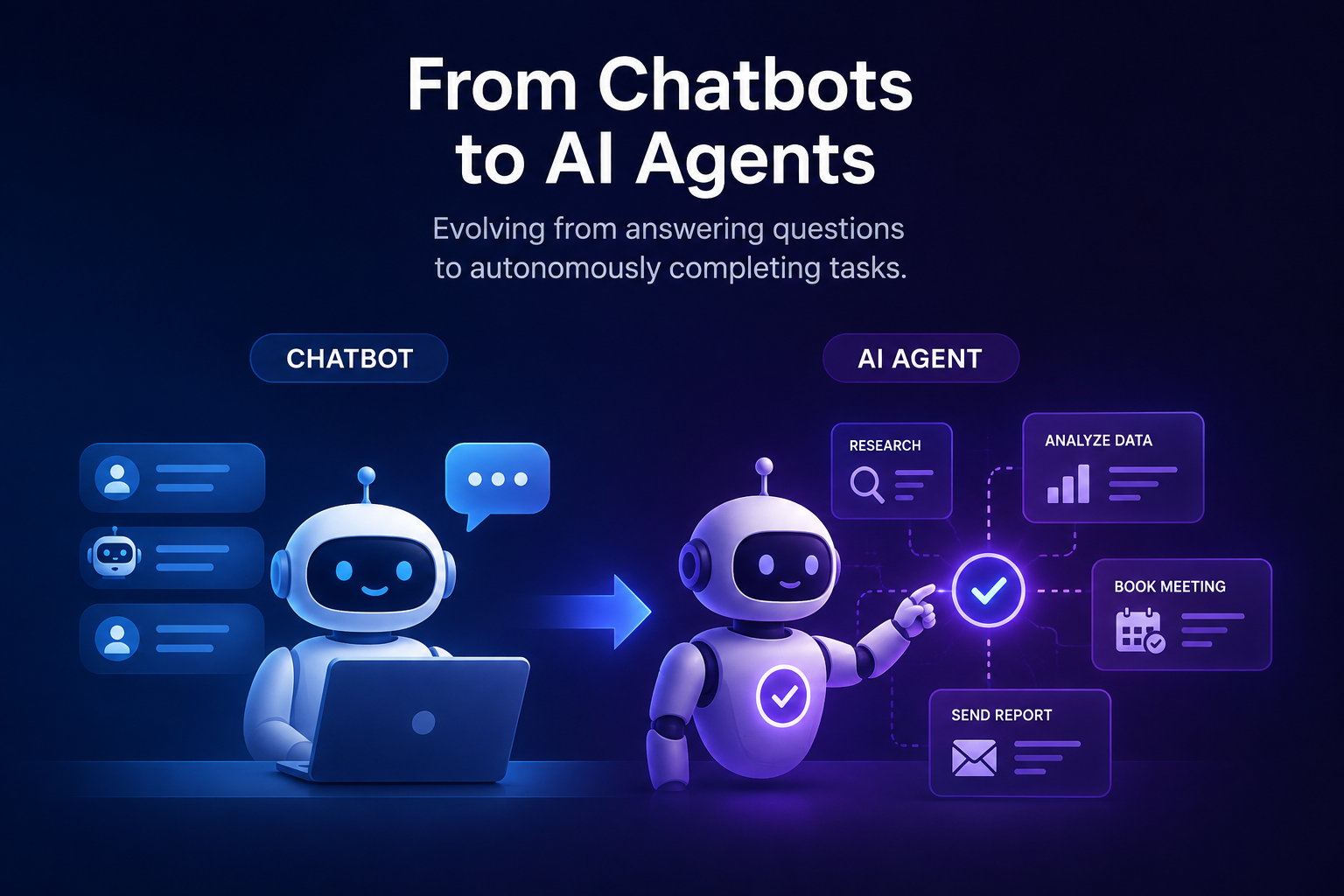
1. The Chatbot Era: Simple, Scripted, and Reactive
For nearly a decade, chatbots were the face of AI for most businesses. They lived on websites as small chat widgets, answering FAQs, guiding users through basic troubleshooting, or collecting leads. Under the hood, most of these systems relied on decision trees, keyword matching, or narrowly trained intent classifiers. They were reactive by design: a user typed something, the bot matched it against a predefined set of responses, and the conversation ended the moment it strayed outside that script.
This rigidity was both the strength and the weakness of early chatbots. They were predictable, cheap to deploy, and easy to audit — but they broke down quickly when faced with ambiguity, multi-step requests, or anything requiring real-world context. A customer asking "can you reschedule my order and also update my billing address" would often confuse a traditional chatbot, forcing a handoff to a human agent. Businesses accepted these limitations because chatbots still reduced support costs and handled high-volume, repetitive queries reasonably well.
The turning point came with the rise of large language models (LLMs). Suddenly, bots could understand nuance, context, and intent far more naturally. But even the most fluent LLM-powered chatbot was still fundamentally a responder — it could talk intelligently, but it couldn't act. That gap between "understanding a request" and "executing on it" is exactly what pushed the industry toward the next evolution: AI agents.
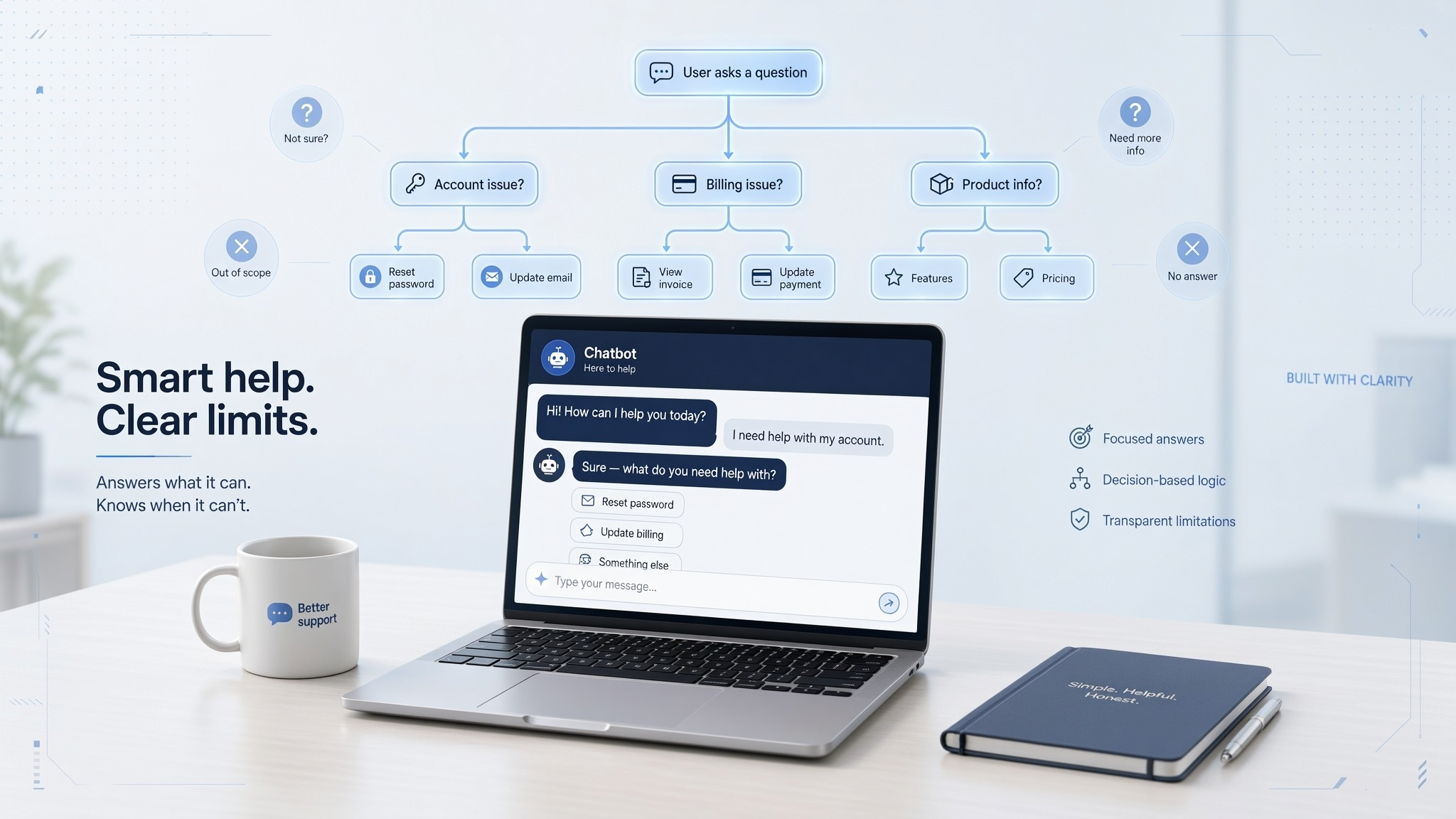
2. What Actually Makes an AI Agent Different
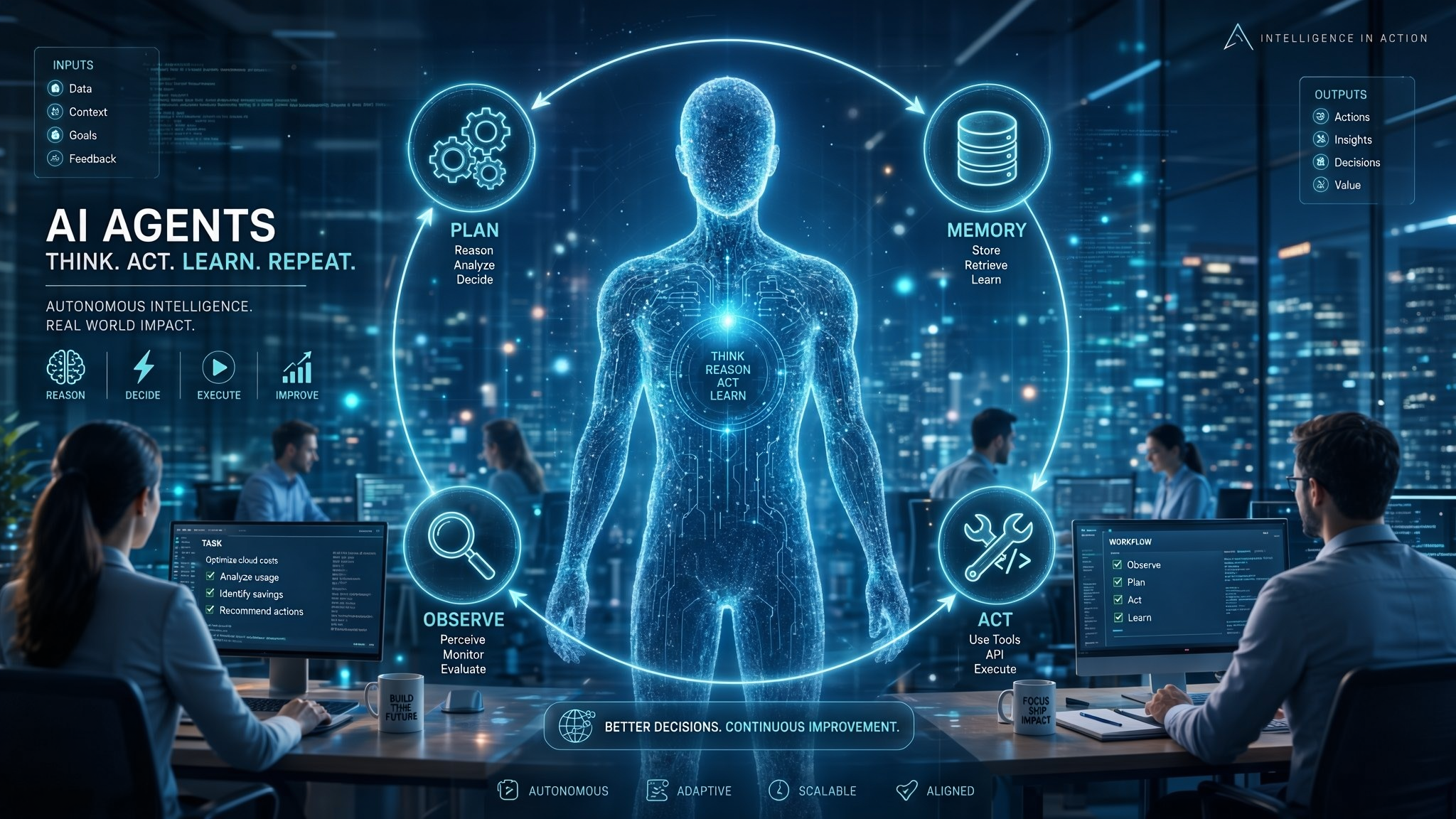
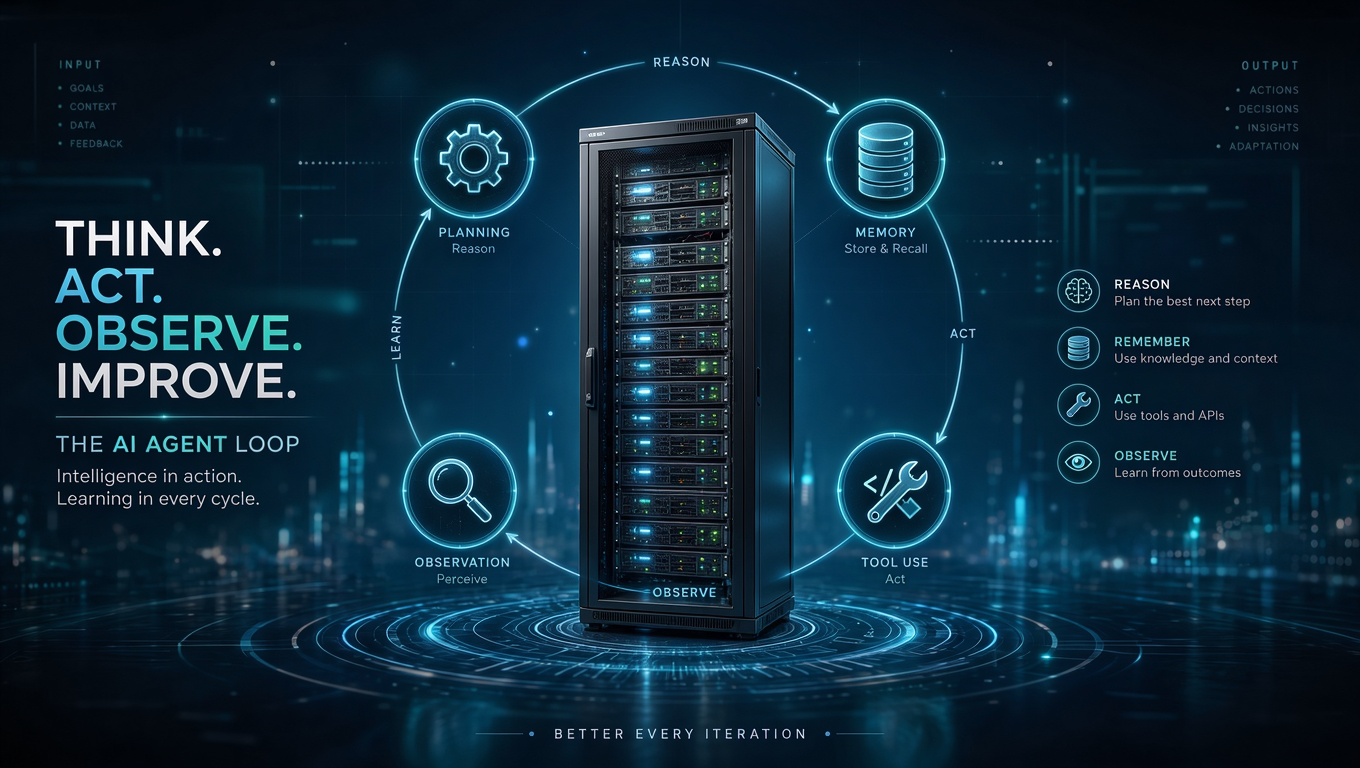
An AI agent is not just a smarter chatbot — it represents a fundamentally different architecture. Where a chatbot maps input to output in a single pass, an agent operates in a loop: it perceives a goal, reasons about the steps needed to achieve it, takes an action using external tools, observes the result, and repeats until the task is complete. This "reason-act-observe" cycle is what allows agents to handle multi-step, open-ended problems that would have stumped a scripted bot entirely.
The key ingredients that make this possible are tool use, memory, and planning. Modern agents can call APIs, browse the web, query databases, write and execute code, or trigger workflows in other software — capabilities that turn a conversational interface into an operational one. Memory allows an agent to retain context across a session (or even across sessions), so it doesn't need to be re-briefed every time. Planning lets it break a vague goal like "prepare my quarterly report" into concrete sub-tasks: gather data, generate charts, draft a summary, and format the output.
This shift matters enormously for real-world applications. A support chatbot can tell a customer their refund policy; a support agent can actually process the refund, update the CRM, and send a confirmation email — all without a human touching a keyboard. That's the practical distinction business leaders should internalize: chatbots answer questions, agents complete work.
3. Real-World Use Cases Powering the Shift
The move from chatbots to agents isn't theoretical — it's already reshaping how companies operate. In customer support, agentic systems now resolve complex, multi-step tickets end-to-end: verifying account details, checking inventory, processing exchanges, and updating downstream systems, all within a single conversation. In software development, coding agents can read a codebase, identify a bug, write a fix, run tests, and open a pull request, compressing tasks that once took hours into minutes.
Sales and marketing teams are deploying agents that research prospects, draft personalized outreach, schedule meetings, and update CRM records automatically — turning what used to be a chain of manual tasks into a single automated workflow triggered by one instruction. In operations and finance, agents reconcile invoices, flag anomalies in spending, and generate reports by pulling live data from multiple internal systems rather than relying on someone to manually export spreadsheets.
What ties these examples together is delegation at the task level, not just the message level. Users no longer need to know how to get something done; they simply state the outcome they want, and the agent figures out the sequence of actions required. This is a meaningful shift in how humans interact with software — from operating tools directly to supervising an intelligent system that operates the tools on their behalf.
4. The Technical Backbone: Orchestration, Tools, and Guardrails
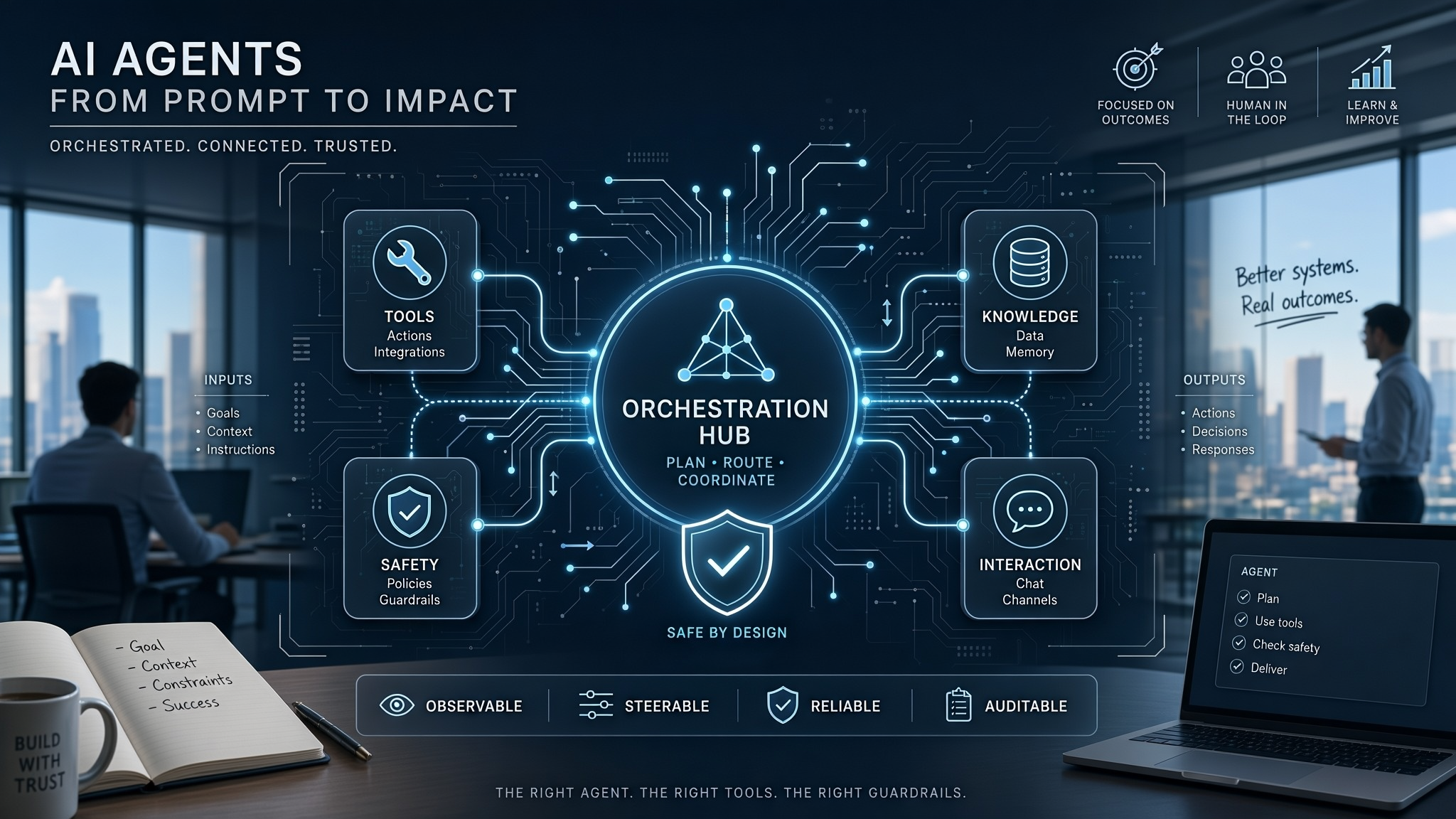
Building a reliable AI agent requires far more engineering than prompting an LLM to "act autonomously." At the core sits an orchestration layer that manages the agent's reasoning loop, decides when to call which tool, and handles retries when something fails. Around that sits a growing ecosystem of standardized protocols — for connecting agents to external tools, databases, and other agents — which has made it dramatically easier to plug an agent into real business systems instead of building custom integrations from scratch every time.
Equally important are the guardrails that keep agents safe and predictable in production. Because agents can take real actions — sending emails, modifying records, spending money — unchecked autonomy is a liability, not a feature. Well-designed agentic systems include permission scoping (what the agent is and isn't allowed to touch), human-in-the-loop checkpoints for high-stakes actions, logging for auditability, and fallback behavior when the agent is uncertain or a tool call fails.
This is also where much of the current engineering effort in the industry is concentrated. It's relatively easy to demo an agent completing a task successfully once; it's far harder to guarantee it behaves correctly and safely across thousands of edge cases, with unpredictable inputs, flaky APIs, and shifting business rules. The companies pulling ahead in this space are the ones treating agent reliability as seriously as they treat uptime for any other piece of production infrastructure.
5. Challenges and Open Questions
Despite the excitement, agentic AI is still maturing, and several challenges remain unresolved. Reliability is the biggest one: agents can compound small errors across multiple steps, and a single wrong tool call early in a task can cascade into a completely incorrect outcome by the end. Unlike a chatbot's single bad response, an agent's mistake might involve real-world consequences — an incorrect refund issued, a wrong email sent, or a bad code change merged.
Trust and transparency are equally pressing. Users and businesses need visibility into why an agent took a particular action, not just what the final result was, especially in regulated industries like finance and healthcare. This has driven growing interest in explainability tools, action logs, and interfaces that let humans audit an agent's reasoning trail after the fact.
There's also the question of cost and complexity. Agentic workflows often involve many more model calls than a single chatbot response, which increases latency and operating expense. Businesses adopting agents need to think carefully about where the added capability genuinely justifies the added cost — not every task needs a fully autonomous agent when a simpler automation or a well-designed chatbot would do the job just as well.

6. What This Means for Businesses Moving Forward
For companies still relying on basic chatbots, the roadmap forward doesn't require an immediate leap to full autonomy. The most successful adopters are taking an incremental approach: starting with narrow, well-scoped agentic workflows — like automated order tracking updates or internal report generation — before expanding into more complex, higher-stakes processes. This lets teams build confidence in the system's reliability while keeping a human in the loop for anything with real financial or reputational risk.
Choosing the right use cases matters more than choosing the most advanced technology. Repetitive, multi-step tasks with clear success criteria — processing refunds, qualifying leads, generating standard reports — are ideal early candidates. Highly ambiguous or high-stakes decisions, on the other hand, still benefit from human judgment augmented by AI rather than full delegation.
Ultimately, the shift from chatbots to agents mirrors a broader pattern in software history: every wave of automation starts by assisting humans and gradually earns the trust to act on their behalf. Businesses that treat this as a gradual capability-building process — rather than a one-time technology swap — will be the ones that capture the real productivity gains agentic AI promises, without absorbing the risks of moving too fast.